
The fastest way to improve batting timing is to combine game-like centre-wicket simulation with short, variable machine reps and coached decision tasks, because timing is an anticipation skill, not a volume skill. Reading a bowler’s release and body cues matters more than facing hundreds of repetitive balls. Coach-led indoor sessions that mix these elements, like the ones we run at Kings Cricket Academy, build that anticipation faster than solo net practice ever does.
Key Takeaways
The fastest way to improve batting timing is through simulation, variable machine drills, live decision tasks, and coach-led indoor sessions focused on anticipation.
| Point | Details |
|---|---|
| Combine simulation and drills | Use game-like centre-wicket, machine bursts, and decision tasks to develop anticipation skills faster. |
| Progress through structured stages | Follow a four to eight-week plan from foundation to mastery, gradually increasing the difficulty of drills. |
| Pair machines with live bowling | Use machines for technique and combine with live-bowler work to develop anticipatory cues essential for timing. |
| Focus on root causes of faults | Check triggers, head movement, and footwork first before introducing new drills or changing technique. |
| Use Kingscricketacademy tools | Our indoor lanes, radar monitors, and video analysis support faster progress in timing and decision-making. |
Table of Contents
- Five high-value batting timing drills with setup and progression
- Structuring a session and a progression plan over weeks
- Ball machines versus live bowlers: best practice and limits
- Coaching cues and anticipation drills to fix timing first
- Measuring progress with simple tests and tech-enabled checks
- Common timing mistakes and quick in-session fixes
- How our indoor coaching and measurement tools support faster timing gains
- FAQ
- Sources
Five high-value batting timing drills with setup and progression
Each of these drills targets a different piece of the timing puzzle. Run them in rotation rather than picking one and grinding it for an entire session.
- Centre-wicket simulation: Set cones or mini-goals as field targets, bowl varied lengths, and score points for placement rather than just contact; progress by shrinking the target zones as timing improves.
- Variable-release short-burst machine drill: Randomise length and pace across six-ball bursts rather than long, repetitive spells, resting between bursts so concentration stays sharp.
- Mixed live-bowler rotation: Rotate spin, pace and angle every few deliveries so the batter has to reset their trigger movement and reread each bowler’s cues.
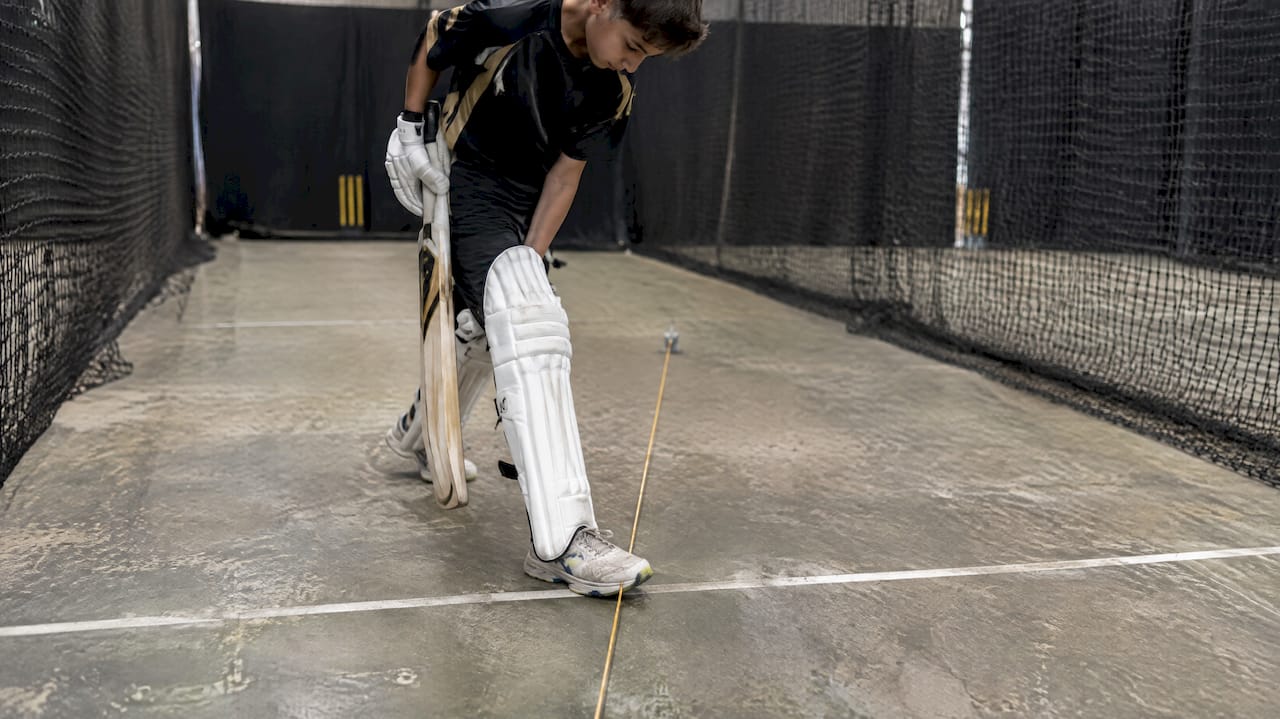
- String or pipe-cleaner alignment drill: Lay a string or pipe cleaner along the crease to mark toe and stance alignment, a low-cost fix borrowed from coaching anecdotes like the ‘string theory’ alignment method used to correct stance issues quickly.
- Junior reaction and shadow-timing drills: Use soft balls and underarm feeds for younger players, focusing on watching the hand and shadowing the shot before adding a real ball.
For the centre-wicket drill, start with wide scoring zones and a slower feed, then narrow the zones and introduce pace as the batter’s hit percentage climbs. The variable-release machine drill works best in bursts of six to eight balls with at least thirty seconds of rest, since fatigue undermines the very anticipation you are trying to train. Our junior cricket drills guide has more age-specific variations for the reaction and shadow-timing work.
Pro Tip: Run the string alignment drill for a few minutes at the start of every session until correct toe placement becomes automatic, then drop it to a weekly check.
Structuring a session and a progression plan over weeks
A session is only as good as its structure. Random hitting without a plan wastes time that focused decision-making would use far better.
For juniors, a session should include a warm-up, decision-based drills, machine or underarm reps, and cool-down and feedback in balanced segments. Adults extend this to 45 to 60 minutes, adding live-bowler rotation and centre-wicket scoring games in the middle block.
Progression over four to eight weeks follows three stages, which echo the reaction-time staging used in physical literacy development:
- Foundation (weeks 1 to 2): Fixed-length, fixed-pace feeds to build a clean trigger movement and stance.
- Accumulation (weeks 3 to 5): Introduce variable length and pace, plus simple decision tasks like leaving balls outside a marked zone.
- Mastery (weeks 6 to 8): Mixed live bowling, smaller target windows, and less predictable release points to force faster anticipation.
Raise difficulty only once a player is consistently hitting the target zone or making the correct decision, not on a fixed timetable.
Ball machines versus live bowlers: best practice and limits
Machines are excellent for grooving technique, but they cannot replace a bowler’s arm action and body language. The Australian Sports Commission advises against relying on machines alone, since they lack the visual cues batters need to anticipate line and length in a real match.
Use machines for short, focused bursts rather than marathon sessions, and always pair them with live-bowler work in the same week.
- Beginners and juniors: around 70% machine work to 30% live bowling, prioritising clean technique first.
- Intermediate players: closer to a 50/50 split, adding decision tasks to machine reps.
- Advanced and adult players: majority live-bowler work, with machines reserved for specific technical corrections or pace exposure.
A typical session might open with variable-release machine work on length, then shift to live-bowler centre-wicket scoring for the remainder, forcing the batter to apply the technique under real anticipatory pressure.
Coaching cues and anticipation drills to fix timing first
Many timing faults can trace back to a handful of root causes, so check these before prescribing more drills.
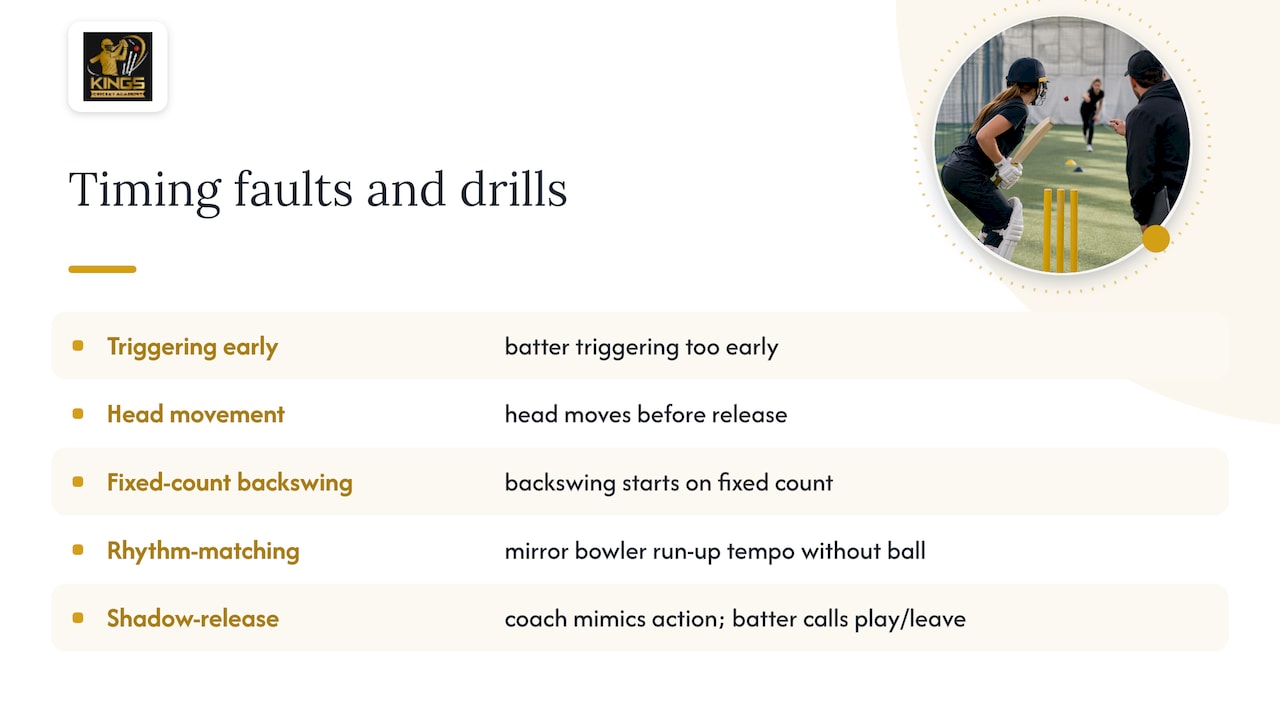
Watch for a batter triggering too early, a head that moves before the ball is released, or a bat that starts its backswing on a fixed count rather than in response to the bowler. Rhythm-matching drills, where the batter mirrors the bowler’s run-up tempo without a ball, sharpen this reading skill. Shadow-release drills, where a coach or feeder mimics the bowling action and the batter calls “play” or “leave” before any ball arrives, train the same anticipation without the pressure of contact.
Decision-focused tasks work well too: reward correctly left balls as highly as well-timed shots, and set field-based targets so batters are reading gaps as described in our guide on finding gaps as a batter. Small technical fixes, like better balance at the crease or correct toe alignment, often resolve timing issues faster than any drill alone.
Pro Tip: If a batter is consistently late on the back foot, check their trigger timing before changing their grip or stance, the fix is usually in the decision window, not the technique.
Measuring progress with simple tests and tech-enabled checks
Guesswork is the enemy of good practice, so track numbers alongside feel.
- Gap-hitting percentage: Record how many of 20 balls are placed into marked gaps rather than hit straight to fielders.
- Reaction-to-length test: Time how quickly a batter commits to front or back foot once the ball is released.
- Video split-screen comparison: Film the same drill weeks apart and compare trigger timing and head position side by side.
One of the more useful checks is radar speed data, since the Australian Sports Commission’s physical literacy framework ties reaction development to staged exposure, and pairing speed readings with video notes shows whether a batter’s reaction window is genuinely shrinking or just feels faster. Retest regularly every few weeks rather than every session, since timing gains require repeated exposure to be measurable.
Common timing mistakes and quick in-session fixes
Most timing problems come down to a short list of habits, and most have a fast fix.
- Undirected volume: Swap aimless net overs for decision-rich reps with a scoring target.
- Triggering too early: Add a delay cue, such as waiting for the bowler’s front foot to land before moving.
- Poor footwork: Use short step-and-hit routines to rebuild a clean base before adding pace.
- Mismatched equipment: Check machine settings match the batter’s level, an unsafe or overly fast setting teaches flinching, not timing.
How our indoor coaching and measurement tools support faster timing gains
We built Kings Cricket Academy around the principles above: six indoor lanes with professional bowling machines and radar speed monitors mean every drill in this guide, from variable-release bursts to gap-hitting tests, runs on the same equipment our coaches use for HD video analysis and progress tracking.

- 1-on-1 Coaching and Batting Coaching sessions focus on the anticipation and decision-making work covered above.
- Junior Cricket Coaching applies age-appropriate versions of the reaction and shadow-timing drills.
- Fast Bowling Coaching supports the live-bowler side of a hybrid session for teams wanting both ends covered.
For regular practice, our 6 visit Plan and 10 visit Plan suit players working through the four to eight week progression above without booking a new session each time. Book a lane or coaching session to see where your timing sits today.
FAQ
What is the fastest way to improve batting timing?
Combine centre-wicket match simulation with short, variable-release machine bursts and live-bowler decision tasks. Anticipation, not repetition volume, is what drives faster timing, which is why the Australian Sports Commission recommends against relying on machines alone.
How often should juniors practise timing drills?
Two to three focused sessions a week of 30 minutes work better than one long session, especially when each session mixes decision tasks with technical reps. Progress through the Foundation, Accumulation and Mastery stages over four to eight weeks rather than rushing difficulty.
Are ball machines bad for learning to time the ball?
Machines are not bad, but used alone they miss the bowler’s body cues that batters need for anticipation, according to Australian Sports Commission guidance. Pair machine work with live-bowler reps in every week of practice for the best transfer to match play.
How do I know if my timing is actually improving?
Track a gap-hitting percentage over 20 balls and compare video footage of the same drill every two to three weeks. Watching trigger timing and head position side by side shows whether the reaction window is genuinely shrinking.
Does Kings Cricket Academy offer sessions focused on timing?
Yes, our 1-on-1 Coaching, Batting Coaching and Junior Cricket Coaching sessions at Kings Cricket Academy use radar speed monitors and HD video analysis to build and measure timing. Sessions are booked by the hour or through membership plans; current pricing details are available on our website.
Sources
Recommended
- Cricket Drills For Junior Players: Batting, Bowling & Fielding
- Cricket Batting Drills On 1 In Sydney: Improve Faster
- Cricket Training Tips