
Improving your batting is rarely about simply spending more time in the nets. The quality of your practice matters just as much as the number of balls you face.
A player can repeat the same shot hundreds of times while continuing to make the same technical mistake. Focused batting drills can help identify those weaknesses and give players a structured way to correct them.
At Kings Cricket Academy, our 1-on-1 cricket coaching sessions in Sydney, Blacktown and Kings Park give players dedicated time with a coach to work on technique, footwork, shot selection, timing and confidence.
Whether you are a junior cricketer preparing for representative trials, a club player looking to improve your performance, or a beginner building your fundamentals, targeted batting practice can make each training session more productive.
Why 1-on-1 Batting Practice Can Help
Group training is an important part of cricket development. Players need to practise with teammates, experience different match situations and learn how to perform under pressure.
However, group sessions can make it difficult for a coach to spend extended time correcting one player’s technique.
A 1-on-1 session gives the coach more opportunity to focus on the individual batter.
Depending on the player’s needs, a session can focus on:
- Batting stance and setup
- Backlift and bat swing
- Head position
- Front-foot movement
- Back-foot movement
- Shot timing
- Playing pace bowling
- Playing spin bowling
- Shot selection
- Running between the wickets
- Confidence against different deliveries
The objective is not to make ten technical changes at once. Good coaching identifies the areas that will have the greatest impact and gives the player enough repetition to develop better habits.
7 Cricket Batting Drills to Practise
Here are several batting drills that can be incorporated into individual cricket training.
1. Shadow Batting Drill
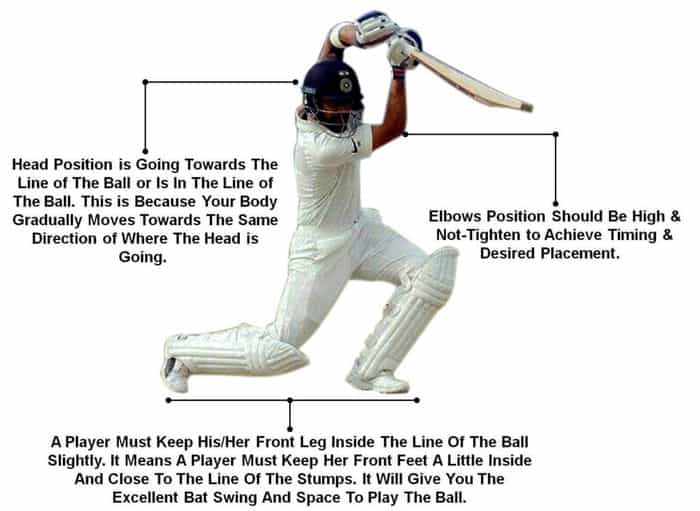
Shadow batting is a simple way to work on movement before introducing a cricket ball.
The player takes their normal stance and rehearses movements for different shots without hitting a ball.
For example:
- Front-foot drive
- Back-foot defence
- Pull shot
- Cut shot
- Straight drive
The coach can observe the player’s setup, balance, head position and movement.
This makes shadow batting particularly useful when working on a technical change.
2. Front-Foot Movement Drill
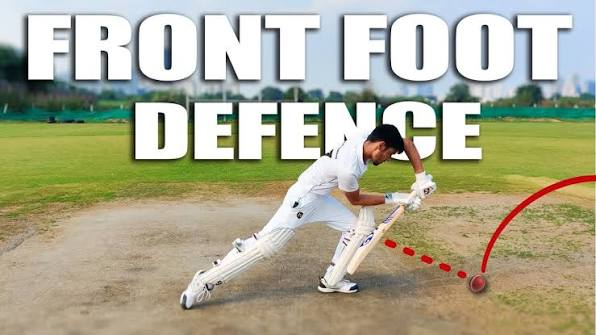
Good front-foot movement starts with reading the length of the delivery.
A coach can use throwdowns or controlled feeds to help the batter practise moving towards the ball while maintaining balance.
The focus should be on:
- Getting into position early
- Keeping the head over the ball
- Maintaining balance
- Moving the front foot towards the intended shot
- Finishing with controlled bat movement
The drill can begin at a slower pace before progressing to faster feeds.
3. Back-Foot Batting Drill
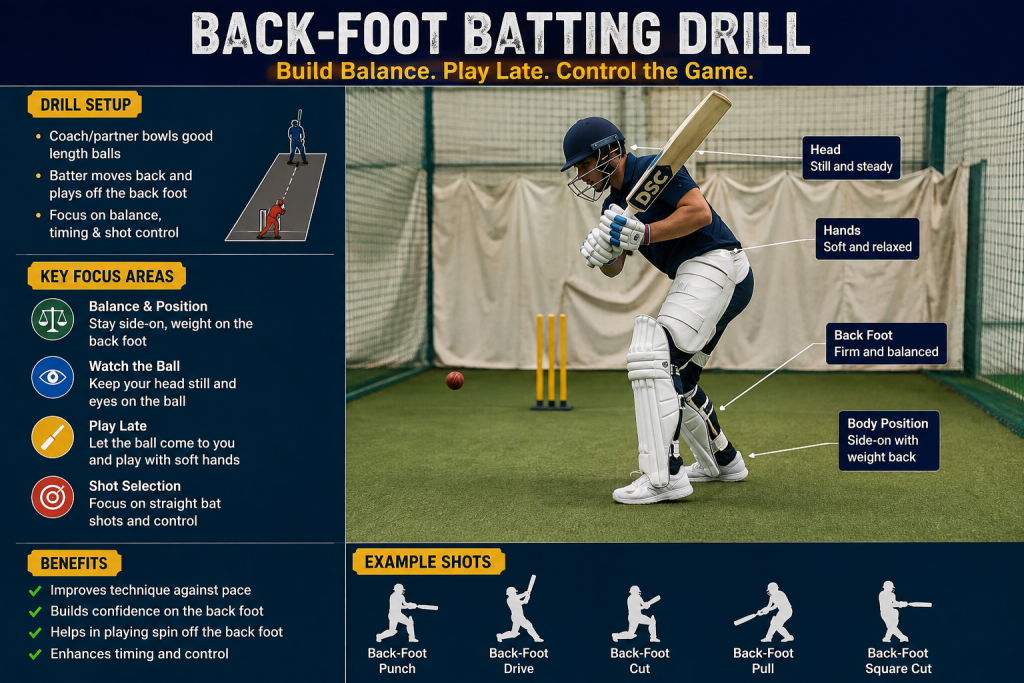
Back-foot movement becomes particularly important when dealing with shorter deliveries.
A coach can use controlled feeds to help the batter recognise when to move back and play an appropriate shot.
Depending on the delivery, the player may practise:
- Back-foot defence
- Square cut
- Pull shot
- Controlled attacking shots
The goal is to develop a quicker response while keeping the batter balanced.
4. Throwdown Timing Drill
Throwdowns allow a coach to control the pace, line and length of deliveries.
This makes them useful for working on timing and shot execution.
Rather than focusing on hitting every ball as hard as possible, the player should concentrate on meeting the ball at the correct point and maintaining control.
A progression could look like this:
Stage 1: Controlled throwdowns
Stage 2: Faster throwdowns
Stage 3: Different lengths
Stage 4: Different lines
Stage 5: Randomised deliveries
This gradually increases the decision-making requirement.
5. Front-Foot Drive Drill
The front-foot drive is one of the fundamental shots in cricket.
A simple progression can involve feeding balls in the player’s preferred driving area and asking them to focus on:
- Stable head position
- Positive front-foot movement
- Straight bat path
- Balance at contact
- Controlled follow-through
The coach can then change the line and length to test whether the player can maintain the same fundamentals.
6. Spin Bowling Footwork Drill
Batting against spin requires good judgement and footwork.
A player can practise moving either down the pitch or back into the crease depending on the length of the delivery.
Useful drills include:
- Getting to the pitch of the ball
- Playing forward defence
- Working the ball into gaps
- Using the crease
- Practising controlled attacking shots
The emphasis should be on reading the delivery before committing to a movement.
7. Bowling Machine Batting Drill
A bowling machine can provide consistent deliveries, allowing a player to repeat a specific movement or shot.
It can also be used to progressively increase difficulty.
For example, a session might begin with consistent deliveries before introducing:
- Faster pace
- Shorter deliveries
- Different angles
- Different lines
- Randomised settings
Bowling machine work should complement coaching rather than replace it. A coach still needs to assess the player’s movement, decision-making and shot execution.
Common Batting Problems That 1-on-1 Coaching Can Address
Every batter develops differently, but some technical issues appear frequently during junior and club cricket.
Poor Head Position
A batter’s head position can influence balance and control at the point of contact.
If the head falls away from the ball, the player may struggle to maintain control over their shots.
Video feedback can help players understand what is happening during their movement rather than relying solely on verbal instructions.
Inconsistent Footwork
Some players commit their feet before properly reading the length of the delivery.
Others remain static and rely heavily on their hands.
Batting drills can help develop better movement patterns and improve the player’s ability to respond to different lengths.
Incorrect Bat Path
A player may have a technically sound stance but still struggle with the path of the bat through the ball.
Specific drills can isolate the movement and give the player repeated opportunities to practise it correctly.
Difficulty Playing Pace
Facing faster bowling requires quick decision-making and controlled movement.
Training can gradually introduce greater pace while maintaining attention on technique and shot selection.
Difficulty Playing Spin
Spin bowling presents different challenges from pace bowling.
Players need to judge length, use their feet effectively and understand when to attack or defend.
Individual sessions allow these skills to be practised according to the player’s current ability.
What Happens During a 1-on-1 Batting Session?
A private batting session can be structured around the player’s current needs.
A typical session may include:
| Training Area | Approximate Focus |
|---|---|
| Warm-up | Mobility and movement preparation |
| Technical assessment | Stance, balance and movement |
| Batting drills | Specific technical corrections |
| Throwdowns | Repetition and timing |
| Bowling machine | Pace and decision-making |
| Video feedback | Reviewing technique and movement |
| Match scenarios | Applying skills under pressure |
The exact structure can change depending on the player’s age, experience and goals.
For example, a beginner may spend more time developing their basic stance and movement, while an experienced club player may work on specific technical weaknesses or preparation for upcoming matches.
Who Can Benefit From 1-on-1 Cricket Batting Coaching?
Individual batting sessions can be useful for players at different stages of development.
Junior Players
Young cricketers can use private sessions to develop strong fundamentals and learn technically sound movements from an early stage.
Players Preparing for Trials
Players preparing for school, club or representative trials may benefit from focused work on their batting technique, consistency and confidence.
Club Cricketers
Club players can use individual sessions to address weaknesses that may be affecting their match performance.
Beginners
Beginners can develop their basic batting technique in a controlled environment without feeling pressured to keep up with a larger group.
Players Returning to Cricket
Players returning after a break can use individual training to rebuild their timing, movement and confidence progressively.
1-on-1 Batting Drills vs Group Cricket Training
Both forms of training have a place in player development.
Group training provides opportunities to work with other players, practise match scenarios and develop competitive skills.
1-on-1 coaching provides a different type of training environment.
| 1-on-1 Coaching | Group Training |
| Individual attention | Multiple players train together |
| Specific technical corrections | Broader training programme |
| Personalised drills | Shared drills |
| Immediate coach feedback | Feedback across the group |
| Training based on individual goals | Training based on group objectives |
For many players, combining both approaches can provide a balanced training programme.
How Often Should You Practise Batting?
There is no single training schedule that works for every player.
A junior player may benefit from an individual session every one or two weeks alongside regular club or academy training.
Players preparing for trials or an important season may choose to increase their training frequency for a period.
The important factor is consistency.
A player who regularly practises a small number of specific skills can often make better progress than someone who constantly changes their training focus.
How to Get Better Results From Batting Practice
Your batting practice should have a clear purpose.
Before a session, identify one or two areas you want to improve.
For example:
Goal: Improve front-foot movement.
Instead of simply hitting 100 balls, structure the session around:
- Shadow batting
- Controlled throwdowns
- Front-foot drives
- Different delivery lengths
- Increasing pace
- Match-style scenarios
This gives the practice session a clear progression.
Players should also track their progress over time. Video footage, coach feedback and simple training notes can help identify whether a technical change is becoming consistent.
Cricket Batting Coaching in Sydney
Finding the right training environment can make a significant difference to a player’s development.
Kings Cricket Academy provides cricket coaching for juniors and players across Sydney, including Blacktown, Kings Park and surrounding Western Sydney areas.
Our 1-on-1 coaching sessions can focus on specific batting requirements rather than following the same programme for every player.
Sessions can include technical batting drills, throwdowns, bowling machine work, video feedback and match-based scenarios depending on the player’s needs.
If you are looking for 1-on-1 cricket batting coaching in Sydney, you can contact Kings Cricket Academy to discuss the most suitable training option for your player.
What age group is suitable for 1-on-1 cricket batting drills?
We work with players from around age 7 through to senior club and representative level. Drills are adjusted to suit the player’s age and current skill level.
How often should a junior player take private batting sessions?
Most families start with one session every one to two weeks. Frequency often increases in the lead-up to trials or the club season.
Do I need to bring my own equipment?
Players should bring their own bat, pads, gloves, and helmet. Kings Cricket Academy provides balls, bowling machines, and other training equipment.
Is one-on-one coaching better than group net sessions?
Both have value. Group sessions build match awareness and are more social, while one-on-one sessions are better for correcting specific technical issues quickly.
Where does Kings Cricket Academy run private coaching sessions?
Sessions are available across Sydney, Blacktown, and Kings Park, NSW, with scheduling flexibility for families across Western Sydney.