
Start with a recognised introductory module such as Bronze through PlayCricket Learn or your state association, then put the basics into practice with short 5 to 10 minute coaching bites on the sideline rather than long lectures. Add simple batting, bowling and fielding drills scaled to age, and if you want steady, measurable progress year-round, structured indoor programmes can provide consistent opportunities.
Key Takeaways
Effective junior cricket coaching combines structured education, short targeted drills, and at-home practice to build skills, confidence, and understanding over time.
| Point | Details |
|---|---|
| Structured coaching pathway | Coach360 offers a tiered qualification system from Bronze to Gold, guiding coaches through foundational to advanced skills. |
| Short, focused sessions | Kids learn best through brief, varied drills lasting 5 to 10 minutes, focusing on game understanding rather than perfect technique. |
| Parental involvement at home | Simple backyard drills like catching, balance, and target bowling reinforce skills and promote daily physical activity. |
| Quality coaching options | Choose coaches with recognised qualifications and clear session structures to ensure safe and effective skill development. |
| Kings Cricket Academy approach | Kings Cricket Academy provides year-round indoor coaching with measurable progress tools, suitable for consistent skill tracking. |
Table of Contents
- Where to train and get accredited: Coach360 and state workshops
- A practical junior session template plus specific drills
- How to choose the right program or coach for your child
- Short, safe activities to reinforce coaching at home
- Kings Cricket Academy: year-round, measurable junior coaching
- FAQ
- Sources
Where to train and get accredited: Coach360 and state workshops
The recognised pathway for junior cricket coaching in Australia runs through Coach360, which organises development into Bronze, Silver and Gold stages. Bronze covers the foundations: safety, communication and the basic skill blocks you need to run a junior session. Silver moves into applied practice, helping you shape sessions around game understanding rather than isolated drills. Gold is built for coaches taking on advanced or representative roles, with a heavier focus on leadership and athlete development.
Course formats mix things up deliberately. You will find short online modules you can work through at your own pace, face-to-face workshops run by state coach developers, and masterclasses aimed at specific skills like spin bowling or batting technique against pace. PlayCricket’s Coach360 pathway is designed to recognise prior learning, so a coach with existing sporting or teaching experience is not forced to start from zero.
Getting enrolled is straightforward:
- Visit PlayCricket Learn or your state cricket association’s coaching page and search for Bronze or Junior modules.
- Register with your basic details and complete any working-with-children check your state requires.
- Work through the online component first, since most pathways expect this before a face-to-face workshop.
- Book into a state coach developer session once the online module is done, if you want the practical, in-person component.
Cost shapes vary. Some of the community learning content through PlayCricket’s coach resources is free, while in-person masterclasses or specialist workshops can carry a fee set by the state body running them. Check your state association’s page for the current structure before you commit a weekend to a workshop.
A practical junior session template plus specific drills
A typical junior session works best when it is broken into short blocks rather than one long technical lecture. Here is a template you can use from week one:
- Warm-up (5 to 10 minutes): light jogging, dynamic stretches and a quick throwing warm-up.
- Batting station (10 minutes): soft feeders where a coach underarms the ball for front-foot control and basic bat swing.
- Bowling station (10 minutes): run-up rhythm drills, focusing on a consistent approach before worrying about line and length.
- Target bowling (5 to 10 minutes): place a cone or marker on a length and reward hitting it, which builds accuracy without over-coaching technique.
- Fielding circle (10 minutes): catching circles where kids throw and catch in a rotating group, building hand-eye coordination.
- Relay throws (5 minutes): two teams race to hit a target or complete a set of throws, adding a game element to fielding practice.
- Mini game-play (10 to 15 minutes): a modified game using soft balls lets kids apply what they just practised under light pressure.
- Cool-down (5 minutes): a quick stretch and a short debrief on what went well.
Scale each drill by complexity and number of repetitions rather than by making sessions longer. Younger children might do a small number of soft-feeder balls before rotating; older children might do more with additional challenges like a target zone. PlayCricket’s junior coach guidance recommends short 5- to 10-minute trackside lessons precisely because young players absorb a narrow focus better than a broad one.
The priority at this age is not perfect technique. It is game understanding, confidence, and making sure every kid on the field gets a genuine turn, not just the strongest players.
Pro Tip: Give one short correction at a time and let the player try it again immediately, rather than stopping the whole group for a technical explanation.
How to choose the right programme or coach for your child
Not every programme suits every kid, so it helps to check a few things before you sign up.
- Confirm the coach holds a recognised qualification such as Bronze or higher through Coach360.
- Ask about the child-to-coach ratio: a crowded session means less individual attention.
- Check there is a clear safeguarding and working-with-children policy in place.
- Ask how progress gets measured, whether through notes, video or informal check-ins with parents.
- Find out session frequency and whether missed sessions can be made up.
Community club sessions tend to be the lower-cost entry point, often bundled into a season’s club fees, while private one-to-one coaching is priced per session and gives more individual feedback. Each suits a different goal: clubs build team skills and match exposure, while private sessions target specific technical gaps.
Watch for red flags: no clear accreditation, a coach who cannot explain how sessions are structured, or sessions that push heavy technical correction onto very young children before they have basic coordination. A junior program that looks more like a senior training session scaled down is rarely the right fit.
Short, safe activities to reinforce coaching at home
Backyard and sideline practice between formal sessions makes a real difference, and it lines up with the Australian Government’s recommendation that children and young people get at least 60 minutes of moderate to vigorous activity daily, with muscle- and bone-strengthening activity on at least three days a week.
Three simple home drills:
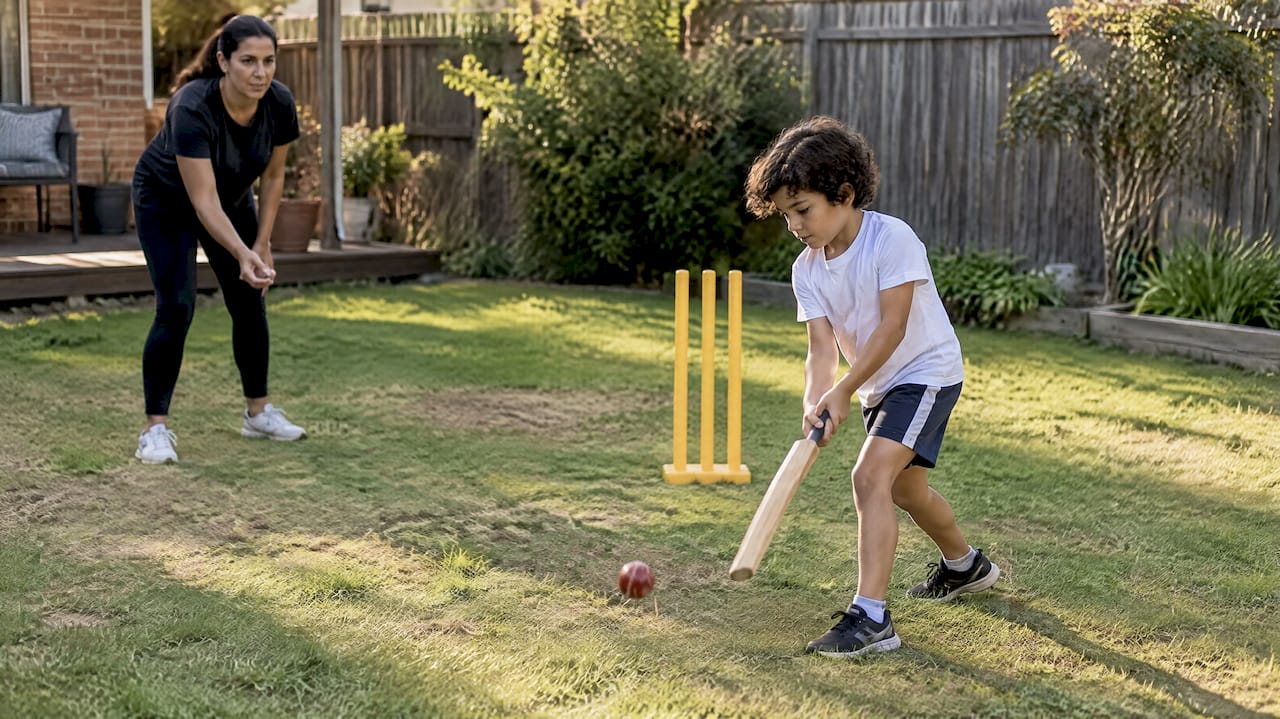
- A hand-eye drill using a tennis ball against a wall, counting clean catches in a row.
- Balance and footwork practice, stepping forward and back onto marked lines to build front-foot and back-foot movement.
- Target bowling into a marked zone on a fence or mat, rewarding consistency over speed.
Most kids make the quickest gains when practice stays short and varied, matching the broader guidance on daily activity for young people.
Track progress simply: keep brief session notes, take short video clips every few weeks to compare technique, and use a speed check where one is available. Balance deliberate practice with free play. A kid who only ever drills and never just plays backyard cricket tends to burn out faster than one who mixes both.
Kings Cricket Academy: year-round, measurable junior coaching
When weather or daylight limits backyard practice, we run junior coaching indoors at a facility with multiple lanes set up for various training activities, from soft-feeder work to full-pace bowling machines.
- Junior cricket coaching is structured around age and skill level, not a one-size-fits-all session.
- 1-on-1 coaching and fast bowling work for kids wanting focused technical attention.
- Video analysis and speed monitoring tools to help observe technique and pace improvement over time.
- 6-visit and 10-visit plans for families wanting regular, predictable practice without weather cancellations.

This suits parents who want consistent, trackable progress rather than a session that gets rained out every second week. If that sounds like what your junior player needs, book a junior coaching session and see where they stand.
FAQ
At what age is it best to start cricket coaching for kids?
Most junior programs start introducing structured coaching around 5 to 7 years old, focusing on basic hand-eye coordination and fun rather than technique. Formal skill-specific coaching tends to ramp up from around 8 years old, once a child has the coordination to hold a bat and ball properly.
How much does private cricket coaching cost?
Pricing varies by provider and session type, so it is worth checking directly with a local programme. At Kings Cricket Academy, lane and machine hire runs from $39 to $60 AUD per hour, and private coaching pricing is available on request.
How do I coach kids in cricket effectively?
Keep sessions short and specific, using 5- to 10-minute coaching bites rather than long technical explanations, as PlayCricket’s junior coach resources recommend. Focus on game understanding and confidence first, with technical correction layered in gradually through repeated, brief interventions.
What is the average salary for a cricket coach in Australia?
Earnings for sports coaches, instructors and officials vary widely depending on whether the role is casual, part-time or a full representative coaching position. Jobs and Skills Australia profiles the occupation and notes the varied nature of work and pay across the sector.
Do I need formal accreditation to coach junior cricket?
A recognised qualification such as Bronze through Coach360 is the standard starting point for anyone coaching junior cricket in a club or community setting. It covers safety, communication and session structure, and most clubs will expect at least this level before you take on a team.
Sources
- Coach development | PlayCricket
- Recommendations for children and young people (5 to 17 years) | Australian Government Department of Health
Recommended
- Cricket Drills For Junior Players: Batting, Bowling & Fielding
- What Age Should Kids Start Playing Cricket?
- Cricket Coaching For Girls: Build Skills, Confidence, And A Love For The Game
- 10 Signs Your Child Is Ready For Competitive Cricket