
A ball that looks driveable on one pitch can climb towards your gloves on another. Choosing between front-foot and back-foot shots depends on reading the delivery, then moving into balance.
Neither option is universally better, and committing too early can leave you reaching or cramped. Your aim is to meet the ball where you can control it. Start with its length, then adjust for line, bounce, and the shot available.
Read Length, Line, and Bounce Before Choosing
Use Length as Your First Guide
Length describes where the ball pitches between the bowler and batter. A fuller delivery generally invites forward movement because you can meet it before it rises far. A shorter delivery usually gives you room to move back and judge its bounce.
However, watch the ball from release rather than waiting until it lands. Its flight gives you information about its likely length.
These common deliveries provide a useful starting point.
| Delivery | Likely Movement | Suitable Response |
|---|---|---|
| Full ball on off-stump | Forward | Straight drive or forward defense |
| Full ball outside off-stump | Forward if playing | Cover drive, defense, or leave |
| Back-of-a-length ball near the stumps | Back | Back-foot defense or punch |
| Short, wide ball | Back and across | Cut, if bounce and width allow |
| Short ball rising towards the head | Create space as needed. | Evade safely rather than force a shot. |
The table gives options, not automatic instructions. A full ball wide of your reach still deserves a leave when the drive carries unnecessary risk.
Let Line and Bounce Refine the Decision
Line tells you whether the ball threatens the stumps, approaches your body, or offers width. Combine that information with its expected height.
A good-length delivery creates the hardest choice because it sits between obvious driving and back-foot lengths. Against it, keep your movement compact and your hands close. Early in an innings, learn the bounce before attempting expansive strokes outside the off-side.
Play Front-Foot Shots Without Overreaching
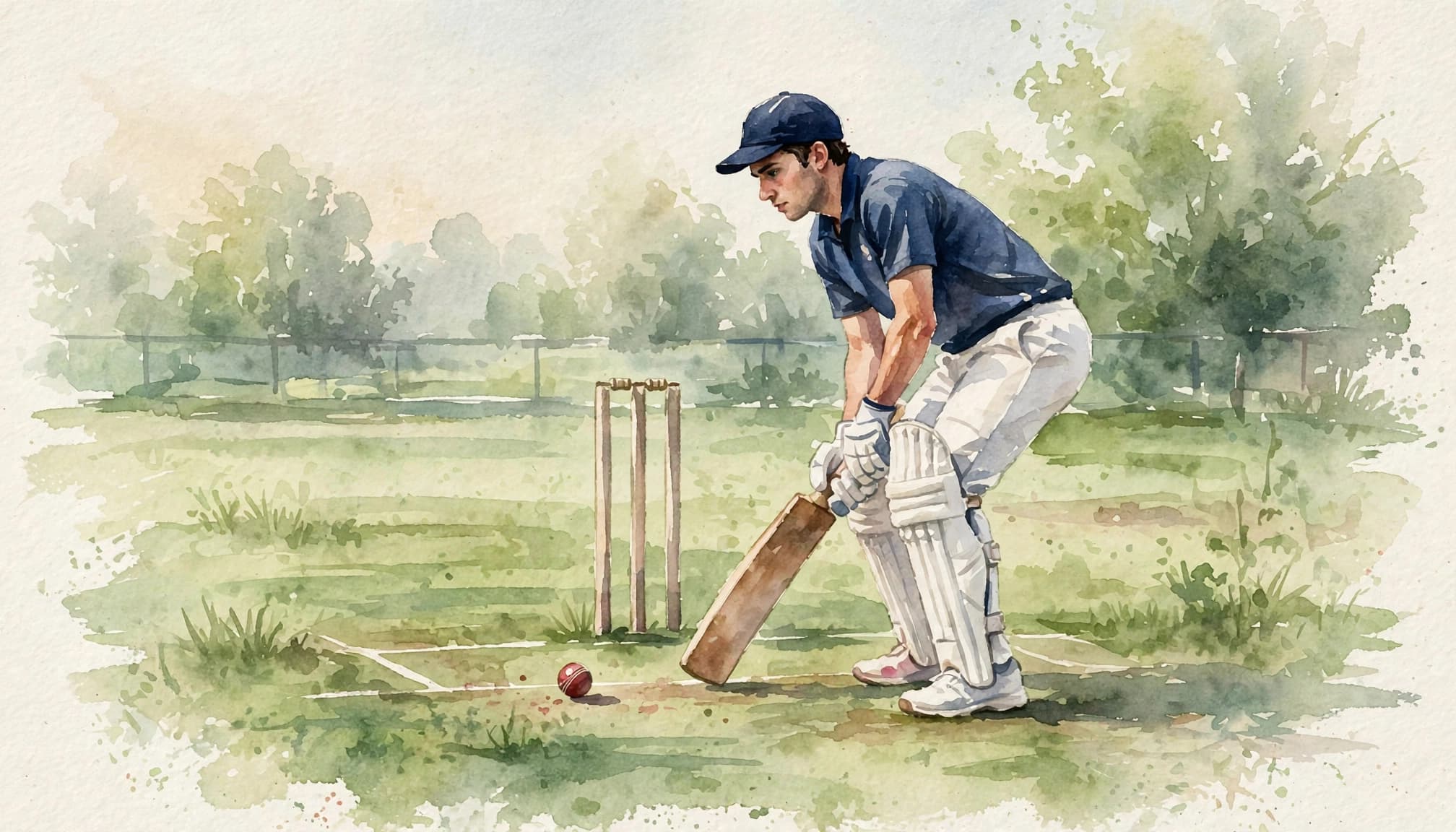
Build a Reliable Forward Defense
For a full delivery threatening the stumps, move your front foot towards the ball’s line. Bend the front knee so your head comes forward without your body tipping sideways.
Keep the bat close to the pad and bring it down with a straight path. Meet the ball beneath your eyes where possible, using relaxed hands to reduce the rebound.
BBC Bitesize’s forward-defence guidance describes front-foot movement, front-knee bend and torso movement into line. The practical aim is a stable position at contact.
Don’t force a huge stride. If you stretch so far that you can’t adjust, your footwork has reduced your control.
Drive Only When the Length Allows It
An overpitched ball around off-stump suits a straight drive. A similarly full delivery wider of the off side can suit a cover drive, provided you reach its line without stretching.
Let your head and front foot move together. Then swing through the ball rather than throwing your hands towards it.
Your follow-through should reflect the shot’s force, not compensate for poor balance. Practise controlled drives first, checking whether you can hold your finishing position.
A delivery on a tighter length may require defence even when its line resembles a ball you drove earlier.
Play Back-Foot Shots with Control
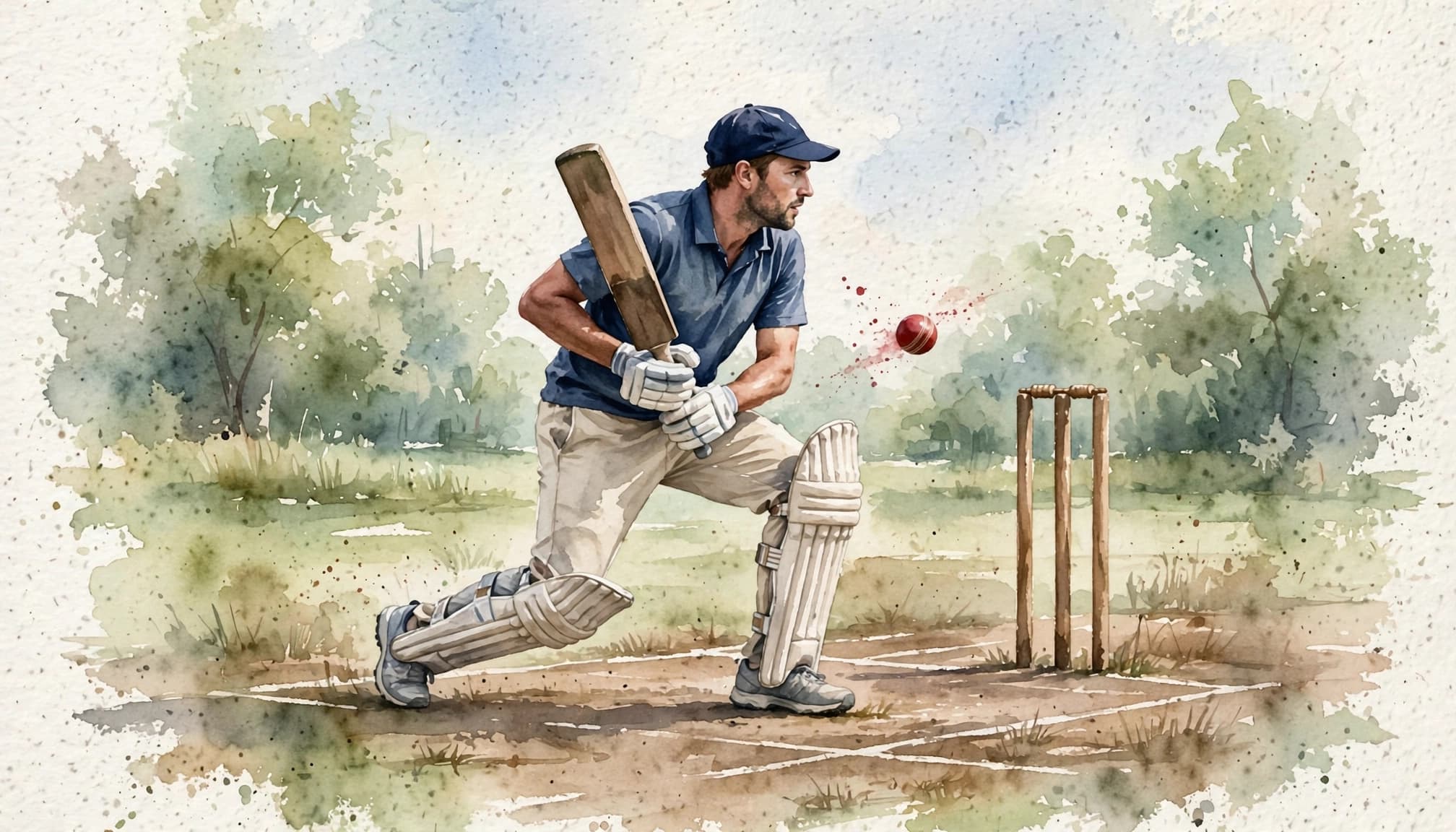
Defend with a Stable Head and Soft Hands
For a back-of-a-length delivery, move your back foot back and across enough to bring your body into line. Keep your knees flexible and your head steady.
Although your weight shifts back, don’t let your upper body fall away. You need a stable base to bring the bat down close to your body.
Use soft hands so the ball drops nearby rather than rebounding towards close fielders. Keep the bat face controlled instead of pushing hard at the delivery.
Sportplan’s back-foot batting drills include coach-fed defensive practice. Controlled feeds let beginners repeat the movement before handling unpredictable bounce.
A ball climbing towards your face needs a different response. Don’t treat every short delivery as suitable for upright defence.
Punch, Cut, or Pull According to the Space Available
A back-foot punch suits a shorter ball you can meet comfortably with a relatively straight bat. Move into position, stay tall enough to handle the bounce, and use a compact swing.
Timing matters more than a large backswing. If the ball crowds your body, defend rather than force the punch.
For a cut, you need width as well as suitable height. A pull requires a short ball you can control across the line. Neither shot follows automatically from moving back.
Beginners should develop back-foot defense before adding forceful attacking strokes against pace. That foundation makes it easier to recognise which balls offer a safe scoring opportunity.
Adapt Your Footwork to the Pitch and Bowler
Judge the Surface by Its Actual Bounce
Turf, matting and concrete-backed practice surfaces can produce different bounce. However, the surface’s name alone doesn’t tell you how every ball will behave.
Use the warm-up and early deliveries to assess pace, bounce and carry. Notice how high a familiar length reaches you.
On a lively surface, a ball you normally drive may rise too sharply for comfortable front-foot contact. Overcommitting forward leaves less room to handle that bounce. On a lower surface, the same length may remain manageable with a compact forward response.
Adjust to what you’re seeing, rather than applying a fixed rule to every matting or turf wicket.
Use the Crease Against Spin
Against spin, getting forward helps when you can meet a full ball close to where it pitches. Moving back to a shorter delivery creates more time to judge turn.
Avoid stopping halfway, where you’re neither close to the pitch nor deep enough to react comfortably. A decisive movement works only when you’ve read the length correctly.
Practise forward defence and moving back into the crease before charging down the pitch. Advancing is useful when you judge the flight well, but it shouldn’t become a predetermined response.
Also consider the field. A controlled push into a gap may offer a better return than an ambitious drive towards a waiting fielder.
Correct the Errors That Cause Poor Shot Selection
Moving forward before reading the ball often produces cramped contact against shorter deliveries. Start from a comfortable stance with flexible knees. Any trigger movement should leave you able to respond in either direction.
Meanwhile, remaining completely static can make you reach with your hands. Rehearse small, purposeful movements rather than trying to manufacture a long stride for every ball.
The Australian Cricket Institute’s guide to common batting dismissals discusses weight position and movement corrections. Reviewing how you lose your balance is more useful than blaming every dismissal on slow reactions.
Moving back doesn’t require leaning backwards. Keep your head supported by your stance so you can control the bat.
When edging full balls, check whether you’re stretching or driving a delivery that isn’t full enough. If shorter balls repeatedly strike the gloves, review whether you’re moving forward too soon or failing to create room.
Video helps separate the decision from the execution. First check the delivery’s length, then watch your first movement and contact position.
Kings Cricket Academy’s individual batting coaching and video analysis can help identify whether the problem is length judgement, movement or bat path. Work on one correction at a time rather than changing your entire technique.
Build Better Judgement with Progressive Practice
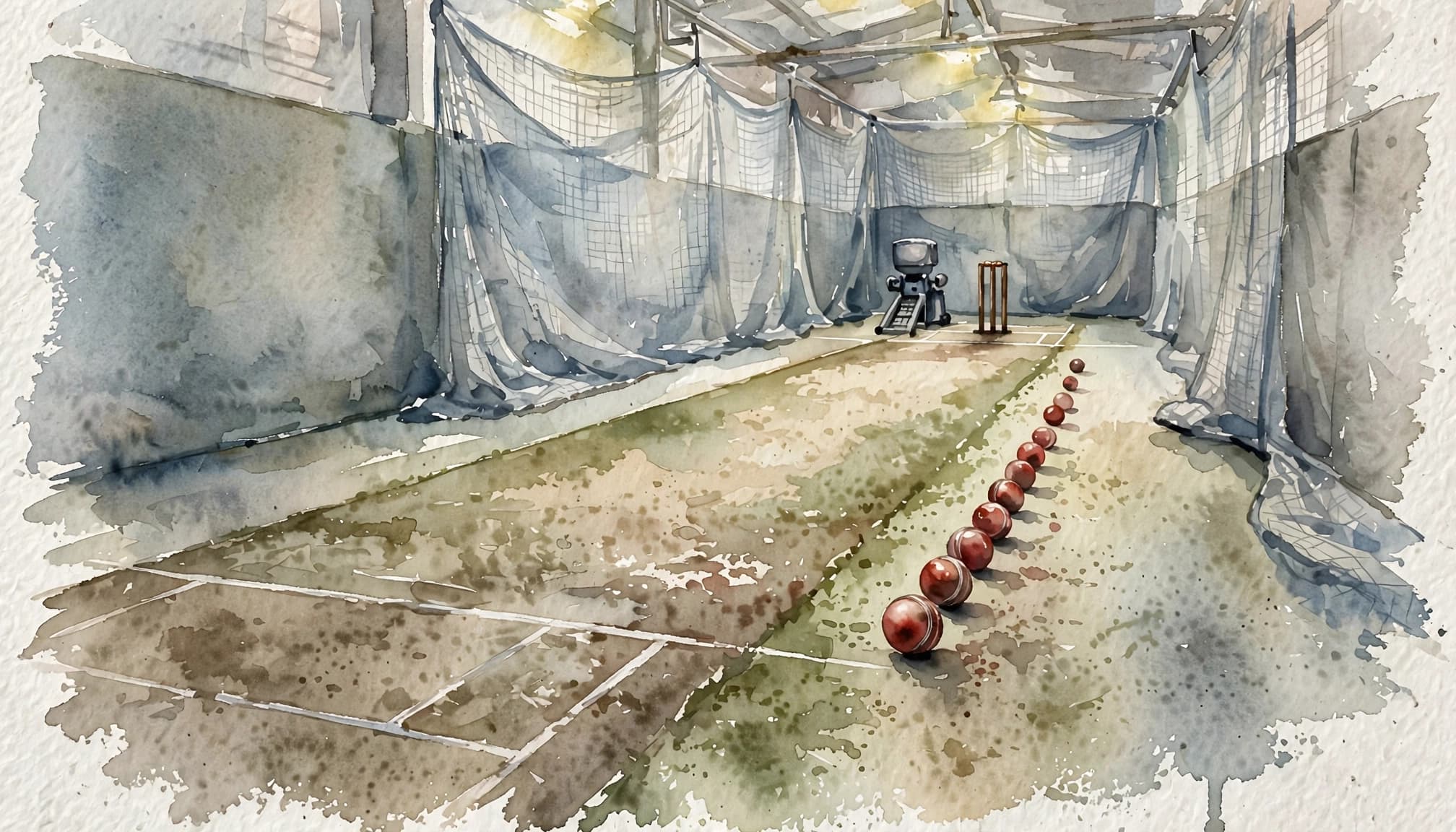
Establish the Movement Before Adding Speed
Start with shadow batting. Rehearse a forward defence and back-foot defence without a ball, checking your head position and balance.
Next, use gentle feeds with a soft ball. For driving practice, begin in your comfortable scoring area and concentrate on a straight bat path.
Increase difficulty in a clear sequence:
- Use controlled feeds to repeat one movement.
- Increase feed speed while keeping the length predictable.
- Mix full and shorter deliveries so you must choose.
- Vary the line as well as the length.
- Finish with random deliveries and match-style scoring decisions.
For hard-ball practice, use suitable protective equipment and supervised feeds. The ECB’s cricket coaching safety guidance provides guidance for organising training safely.
Measure Decisions, Not Just Boundaries
During mixed-length practice, record whether you chose an appropriate response and remained balanced at contact. A well-judged leave or defence should count as a successful decision.
Bowling machines help repeat a particular length, but predictable feeds can hide poor judgement. Follow repetition with varied throwdowns or live bowling so you read the delivery again.
Kings Cricket Academy has six indoor lanes at its Kings Park facility, with bowling-machine training areas and video-analysis capabilities. Its one-on-one cricket batting drills combine technical work with progressive practice.
Choose one session goal, such as avoiding early forward commitment. Review it afterwards through coach feedback or video, then carry the same focus into your next session.
Key Takeaways for Front-Foot and Back-Foot Shots
- Fuller deliveries usually suit forward movement, while shorter balls often require moving back.
- Line and actual bounce determine which defensive or attacking shot fits.
- Keep your head stable and your movement compact enough to adjust.
- Practise predictable deliveries first, then introduce variation to test judgement.
Treat a leave, an evasive response and a controlled defence as useful outcomes. Good batting includes recognising when the delivery doesn’t offer a scoring opportunity.
Frequently Asked Questions
How do I choose between a front-foot and back-foot shot?
Read the delivery’s length first, then adjust for its line and expected bounce. Fuller balls generally invite forward movement, while shorter balls often give you room to move back.
What should I do with a good-length delivery?
Keep your movement compact and your hands close while you judge the bounce. Choose a controlled defence if the ball doesn’t offer a comfortable scoring shot.
Should I lean backwards when playing a back-foot shot?
No. Move your back foot into position while keeping your head steady and your upper body supported by your stance.
How can I practise choosing the right footwork?
Start with shadow batting and gentle, predictable feeds to rehearse each movement. Then mix lengths and lines, so you practise reading the delivery before choosing a response.
Choose the Movement That Gives You Control
The right footwork depends on the ball arriving, not your favourite stroke. Read length early, account for bounce, and move into a balanced position.
Build both forward and back-foot responses through controlled practice, then test them against varied deliveries. As your judgement improves, you’ll spend less time forcing shots and more time choosing the contact you can control.